PocketQuest
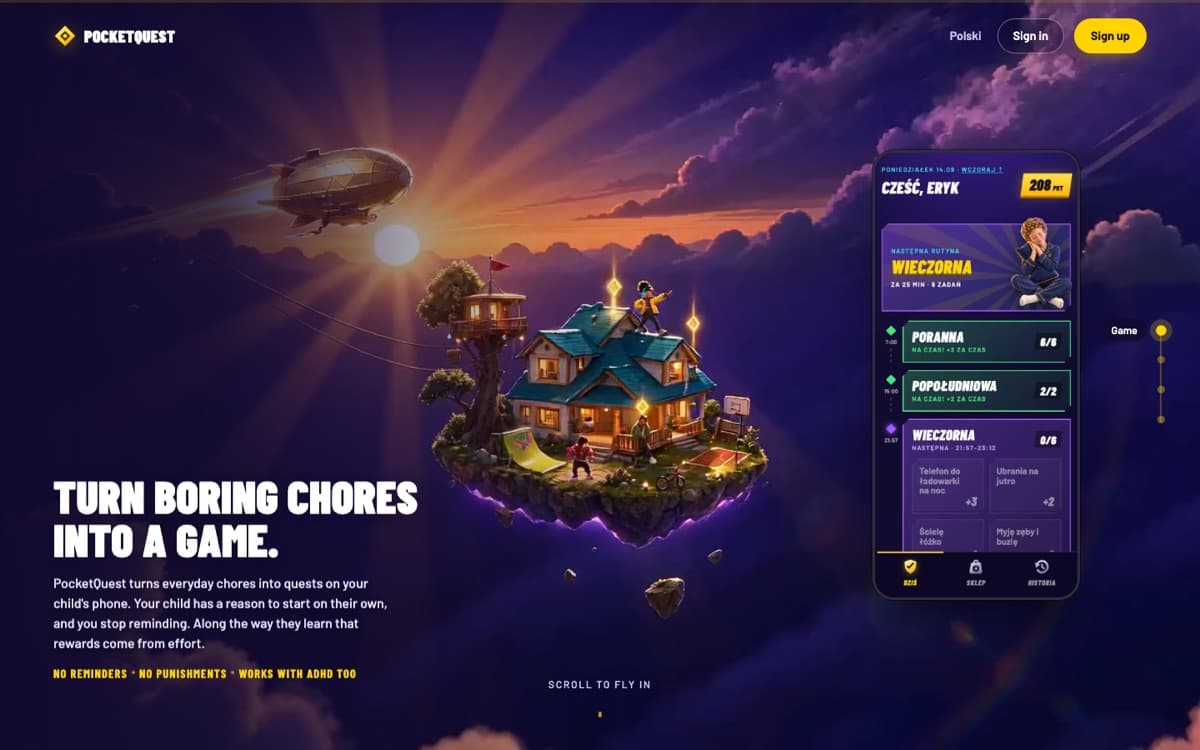
Turns a child's daily chores into quests with points and rewards set by the parent.
Points for routines, pocket money for points. No penalties, ever.
Software built from the ground up for ADHD brains. By one.
I know these difficulties from the inside: procrastination, needing pressure before I can start, attention that leaves the room mid-sentence.
Over the years I collected ways around them. Not cures. Workarounds that hold.
I started building them into tools for myself and for my son, who has ADHD too.
Now, with software and AI, those workarounds become products I can share.
ADHD Native is the name for all of it: one mark, one promise, a growing set of tools.
Each one is a difficulty I have, the way I get around it, and the exact place in a product where you can tap it.
The difficulty
“I can't pick where to start, so I don't start.”
The hack
Draw a task.
The app picks for me, weighing importance and deadline. One redraw, then I do it. An empty focus asks “What now?” and hands me a five-minute starter.
Where
BR Tasks: Focus draw and the “What now?” concierge.
The difficulty
“A long list overwhelms me and I postpone everything.”
The hack
Sift.
One card at a time, keys 1 to 6, a decision in a second. Anything without a date goes to “Maybe” and quietly expires after 30 days.
Where
BR Tasks: the daily sift and the self-expiring “Maybe” list.
The difficulty
“Money is gone before I get to think about it.”
The hack
Pay yourself first.
Savings come off the top the day the pay lands. After that I get one number every morning: what I can spend today.
Where
BR Budget: the pay-yourself-first slot and the daily envelope.
The difficulty
“The buying impulse is faster than my judgment.”
The hack
Pause.
A forced wait that scales with the amount, from a day to ten, and one question: what exactly changes in my life if I buy this?
Where
BR Budget: the Pause wallet and its decision card.
The difficulty
“Without a reward right now, motivation doesn't start. Mine or my son's.”
The hack
Points for routines, pocket money for points.
Instantly, with confetti, with no penalties. Being late never takes anything away; it can only skip a bonus.
Where
PocketQuest: the child's day plan, the chest and the reward shop.
The difficulty
“Anything I'm supposed to do daily bores me by day three. A mood journal dies before it shows anything.”
The hack
Curiosity instead of duty.
An evening entry reveals a tarot card from the full deck of 78 that stays in my entries. AI asks one question that deepens the entry. On Sunday it reads two weeks back from the cards and the words. I come back for the card, and look inward on the way.
Where
Oczko: the card draw, the Hermit's question and the Sunday reading.
Four tools, one mark. Each carries at least one of the hacks above.
Turns a child's daily chores into quests with points and rewards set by the parent.
Points for routines, pocket money for points. No penalties, ever.
A task app that decides what's next so you don't have to: an inbox that sorts itself, a draw, a focus view.
Draw a task. Sift the rest.
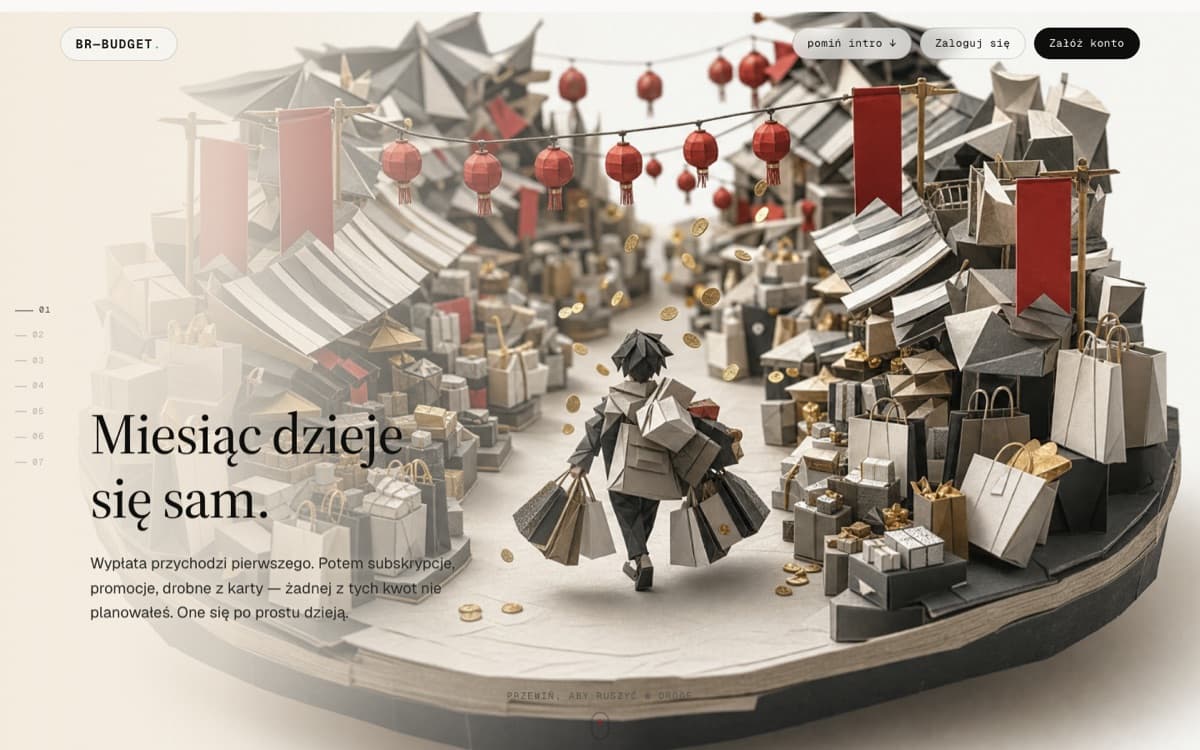
Money that runs itself: savings first, one number a morning, a forced pause before big purchases.
Pay yourself first. Pause before you buy.
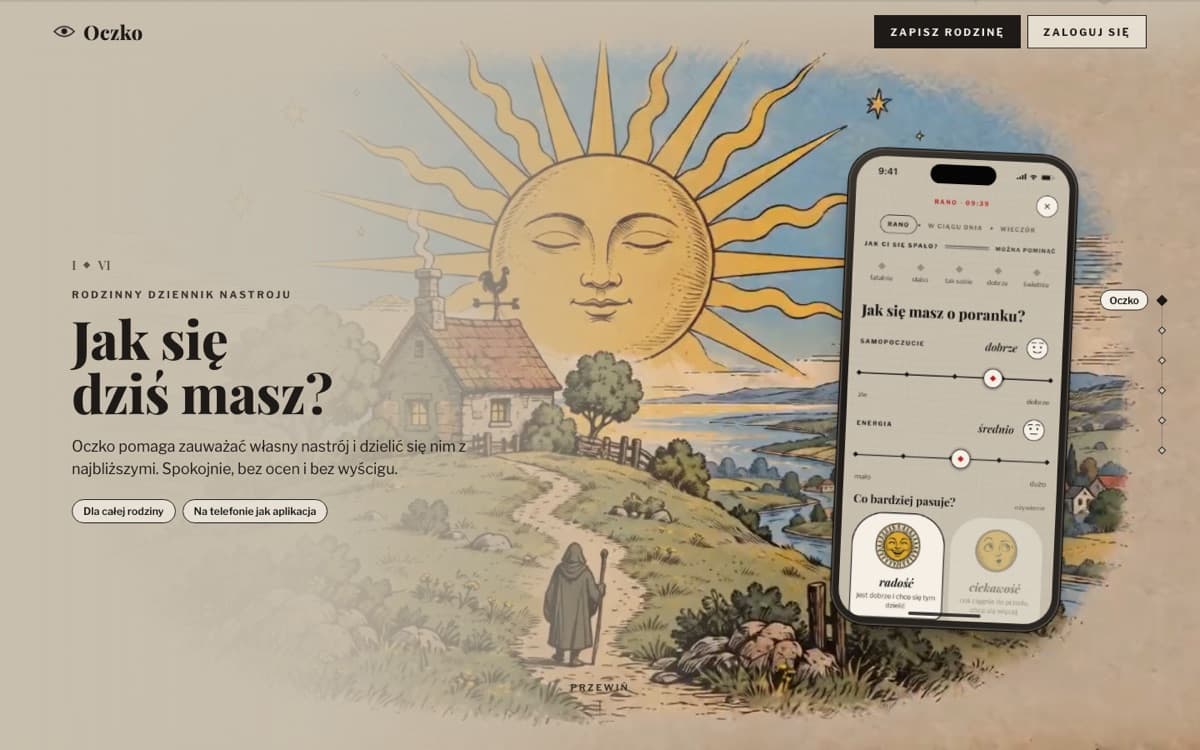
A family mood journal: two sliders, two faces, three words, and a card for coming back.
Curiosity instead of duty.
Seven rules underneath the hacks. Each one is checked against the code of at least three of the four products.
One thing per screen.
I don't make you choose from twenty things. I show you one.
Capture first, think later.
You dump it. Order happens afterwards, often without you.
Nothing is taken away.
Late, skipped, forgotten: it never costs you anything you already have.
Zero shame in the copy.
No red screens, no “you lost”, no “again?”. The app describes, it doesn't judge.
Decide once, then the system runs.
Hard choices happen once a month or once at setup. After that the app keeps watch.
When you don't know what now, the app picks.
An empty head at 2 p.m. is not a user error. It's a case I design for.
Forgetting is built in.
I assume you'll forget. I design so that it breaks nothing.
A self-declared mark, not a certificate. Today it sits on my products. If you build with the same hacks, take it.
Rule of use: the badge links here, and here lists what it means. Don't use it on anything that punishes, shames or takes things away.
Simplest: an image that links here.
<a href="https://adhdnative.com" title="ADHD Native"><img src="https://adhdnative.com/badge/badge-outline-dark.svg" alt="ADHD Native" height="36"></a>Inline: the icon as SVG and the name as text, so it inherits your font and colour.
<a href="https://adhdnative.com" class="adhd-native" style="display:inline-flex;align-items:center;gap:.5em;color:inherit;text-decoration:none;border:2px solid currentColor;border-radius:999px;padding:.3em .8em .3em .6em;font-weight:700;text-transform:uppercase;letter-spacing:.04em">
  <svg viewBox="0 0 24 24" width="1.1em" height="1.1em" fill="none" stroke="currentColor" stroke-width="2.6" stroke-linecap="round" stroke-linejoin="round" aria-hidden="true"><path d="M2 15.5 5 8.5 8 15.5 11 8.5 13.5 13 16 12h5.5"/><path d="m18 8.5 3.5 3.5-3.5 3.5"/></svg>
  ADHD Native
</a>You don't need a diagnosis. If your attention wanders, this is for you.
ADHD Native doesn't diagnose, treat or replace anything. It's how I build.